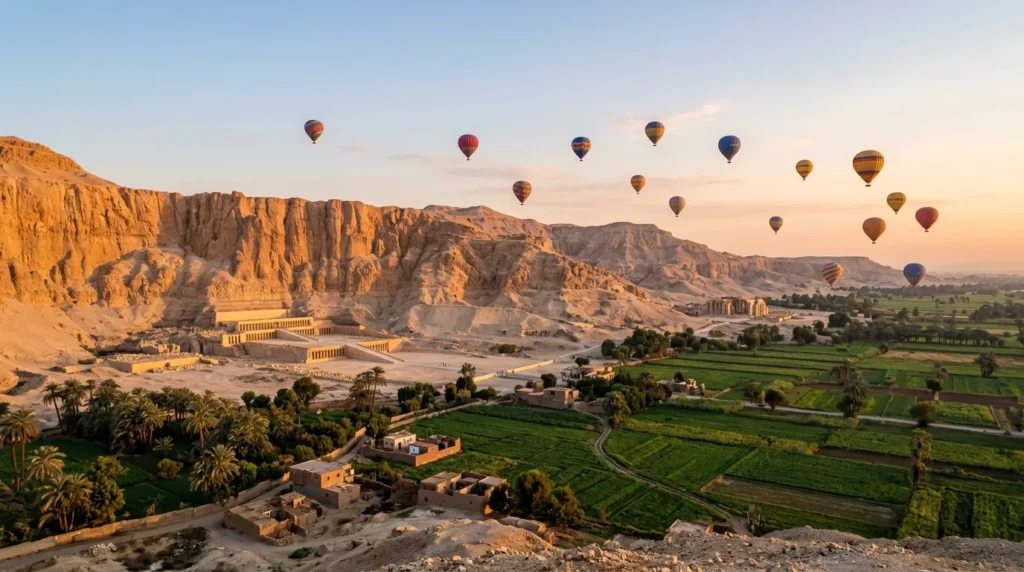
A Luxor morning flight provides travelers with one of the most remarkable vantage points in Egypt. Guests drift quietly above ancient temples, fertile agricultural fields, and dramatic desert canyons. However, travelers usually choose between two distinct departure windows known as Wave 1 and Wave 2.
Understanding these distinct schedules ensures you book the ideal journey for your personal holiday preferences. Therefore, comparing departure hours, lighting conditions, and flight dynamics will help you plan your itinerary effectively.
Understanding the Luxor Morning Flight Departure Waves
Local aviation authorities organize daily balloon ascents into structured departure groups from the West Bank launch fields. Consequently, a first-rate Luxor morning flight takes place either during dawn or shortly after the sun crests the horizon. Skyline Balloons coordinates transfers directly from cruise boats and hotels to ensure seamless arrivals.
Wave 1 launches in total twilight so passengers experience the actual sunrise aloft. In contrast, Wave 2 lifts off roughly forty-five minutes to an hour later under full daylight. For historical background on early aviation principles, see the hot air balloon history curated by Wikipedia contributors. Both waves follow rigorous safety guidelines monitored by civil authorities.
Launch Windows and Wake-Up Times
Securing a Wave 1 slot requires an early alarm, often around 4:00 AM depending on seasonal sunrise variations. In addition, crew members collect guests swiftly for West Bank motorboat and minibus transfers. Meanwhile, Wave 2 passengers enjoy an extra hour of rest before their morning pick-up. You can explore standard flight arrangements on our Services page to review logistics.
Luxor morning flight: Visual Splendor: Wave 1 Dawn Experience
Booking the early Luxor morning flight treats passengers to ethereal color shifts across Upper Egypt. The sun emerges gradually from the eastern desert, illuminating the winding Nile River below. Moreover, early rays strike the limestone cliffs of the Theban necropolis with warm golden tones.
Furthermore, early departures reveal silhouetted temples against pastel pink and amber skies. In fact, seeing the Colossi of Memnon catch morning light creates memories that last a lifetime. Nevertheless, temperatures remain noticeably brisk before daybreak, requiring layered clothing during early ascents.
Luxor morning flight: Visibility and Photography: Wave 2 Clear Skies
Wave 2 provides distinctly different visual advantages for visitors exploring ancient Theban heritage from the air. In addition, full daylight delivers exceptional clarity across monumental structures like Medinet Habu and the Ramesseum. Consequently, architectural details stand out sharply without heavy dawn shadows obscuring deep reliefs.
Photographers often prefer this second Luxor morning flight option because modern digital cameras capture crisp colors easily. For example, vibrant green cultivation borders stark golden desert sands with vivid clarity. To understand how solar heating influences flight planning, consult educational atmospheric data on NOAA atmospheric research. Therefore, enthusiasts seeking sharp archaeological photographs frequently select the later slot.
Wind Stability and Flight Duration
Atmospheric stability changes steadily as the sun warms the desert surface. During dawn departures, surface breezes generally stay calm and predictable. Similarly, Wave 2 pilots utilize gentle air currents to navigate safely across historical coordinates. Guests interested in tailored itineraries can review options through our Packages Preview Layout section.
Logistical Comparison for Luxor Visitors
Time management plays a vital role when balancing aerial excursions with guided ground tours. Choosing the earliest Luxor morning flight leaves the entire remainder of your day open for monument exploration. For instance, you will return to your hotel well before mid-morning heat settles over the valley.
On the other hand, selecting Wave 2 allows a relaxing breakfast before heading toward the launch zone. Additionally, families with young children often favor the later wave to avoid waking up before daybreak. If you have questions about specific pickup routes, you can contact our team through Contact Us directly.
- Wave 1 offers dramatic sunrise panoramas over silent monuments.
- Wave 2 features warm, even sunlight suited for sharp landscape photography.
- Wave 1 returns early enough to start land tours ahead of standard tour buses.
- Wave 2 provides a more comfortable sleep schedule for weary travelers.
Which Luxor Morning Flight Suits You Best?
Ultimately, your personal holiday rhythm dictates the superior option between these two daily launches. Travelers eager to see the literal sunrise from basket height should undoubtedly choose Wave 1. Indeed, floating above the misty Nile valley at first light delivers pure enchantment. Luxor morning flight is worth considering here — here is what you need to know.
Conversely, those who value sleep or desire bright architectural aerial photographs will appreciate Wave 2. Furthermore, both flights provide safe, professionally managed adventures over world-renowned archaeological sites. Feel free to browse our Blog for additional travel ideas across Luxor.
Final Practical Recommendations
Whichever departure window you book, preparing ahead guarantees an effortless morning journey. Always bring warm layers, sturdy walking shoes, and fully charged camera batteries. Finally, an unforgettable Luxor morning flight remains the absolute highlight of any voyage through timeless Egypt.